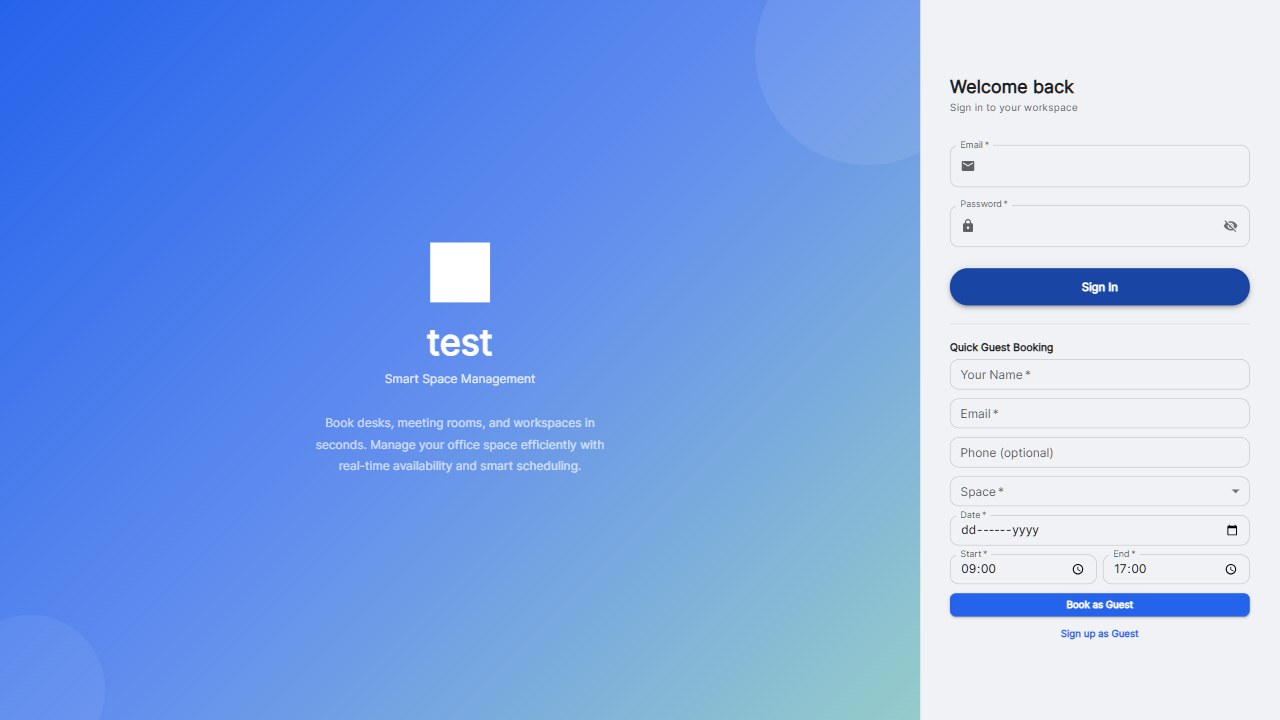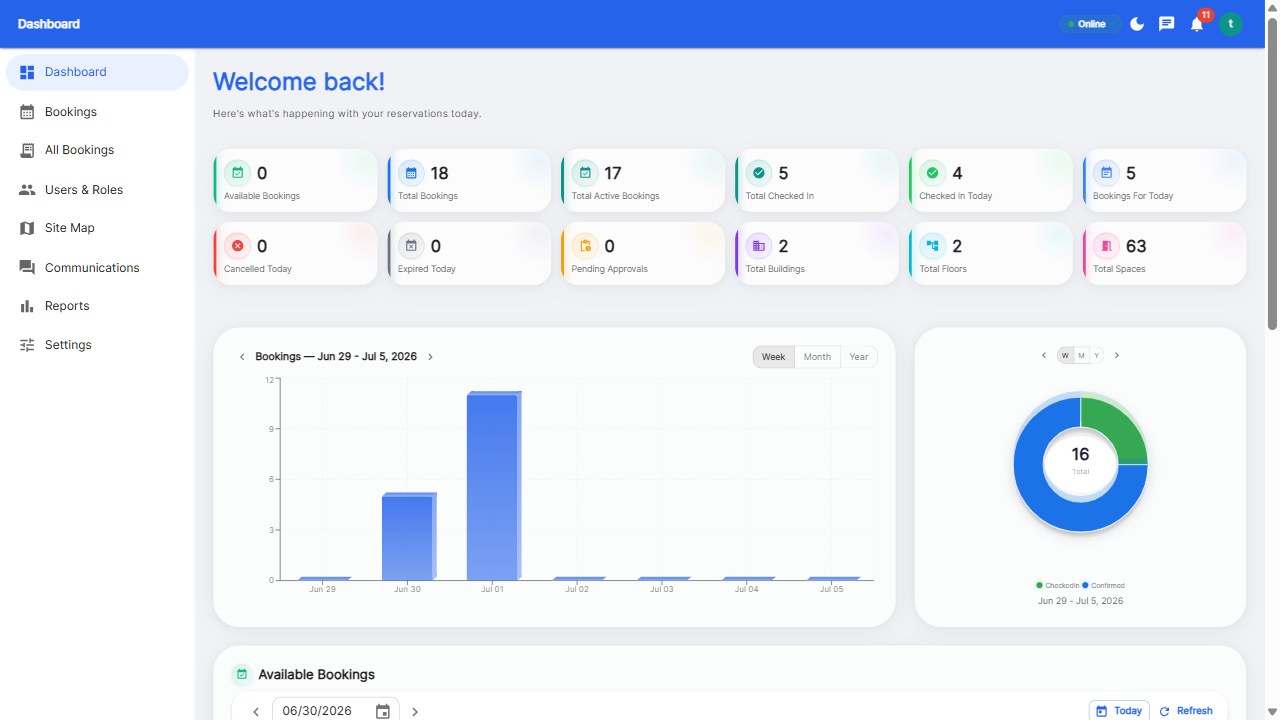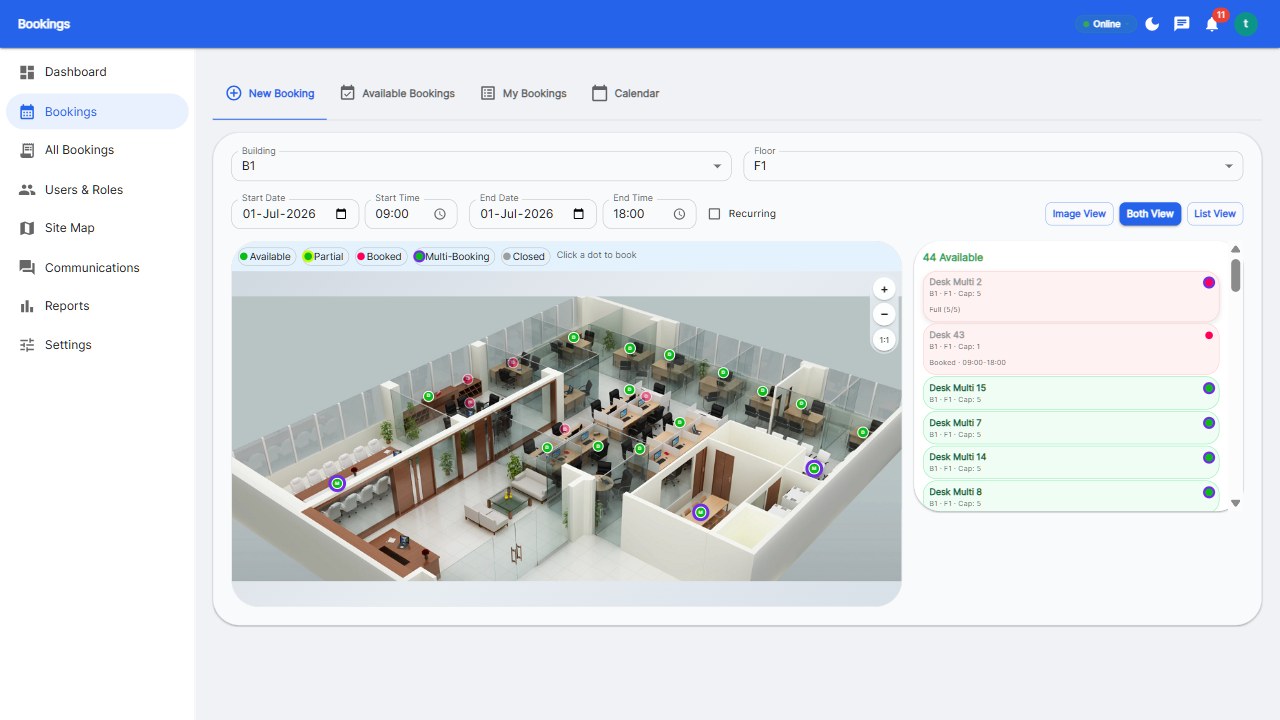
Hot desking is informal desk sharing - employees sit at any free desk, often without booking. Hoteling (also called office hoteling) is the booked, reservation-based model: employees reserve specific desks in advance through software. In 2026, most offices run a hybrid of both: booking software with check-in enforcement, which is what makes 'hoteling' fair and functional.
Hot desking is 'sit wherever there's a free spot'; hoteling is 'reserve your spot before you arrive.' Everything else - fairness, no-show handling, utilization data, and employee satisfaction - flows from that one distinction.
Informal hot desking works beautifully in offices under ~20 people where everyone knows everyone. It breaks down when headcount grows: seat availability becomes a game of arrival timing, and the early birds win by default. That is precisely when hoteling's booking model becomes necessary.
Most offices don't pick one - they blend. Anchor days work hoteling-style (booked and guaranteed); light days work informally (walk in, sit anywhere green on the map). The booking platform becomes the connective tissue: it handles reservations, check-in, no-show release, and the analytics that tell you when informal flow becomes chaos.
Answer three questions: How many employees share desks? Do employees need a guaranteed seat? Do you need space data for lease decisions? One 'yes' beyond the first suggests hoteling - and a booking platform to run it.
Hot desking is informal first-come desk sharing; hoteling is advance booking of specific desks. Hoteling adds fairness, check-in enforcement, and utilization data - which is why it dominates 2026 offices.
For offices over ~20 employees, hoteling (with software) wins on fairness, data, and space efficiency. Small, low-density teams may prefer informal hot desking.
Yes - most hybrid offices blend: booked anchor days plus informal walk-ins on flexible days, all managed through one booking platform.
Run either model with the software made for it.
Start your free 30-day trial at Reservete.com - no credit card required, full access to every feature.

Enterprise workspace management platform. Book desks, meeting rooms, and parking spots in seconds.
Get product updates and workspace tips.