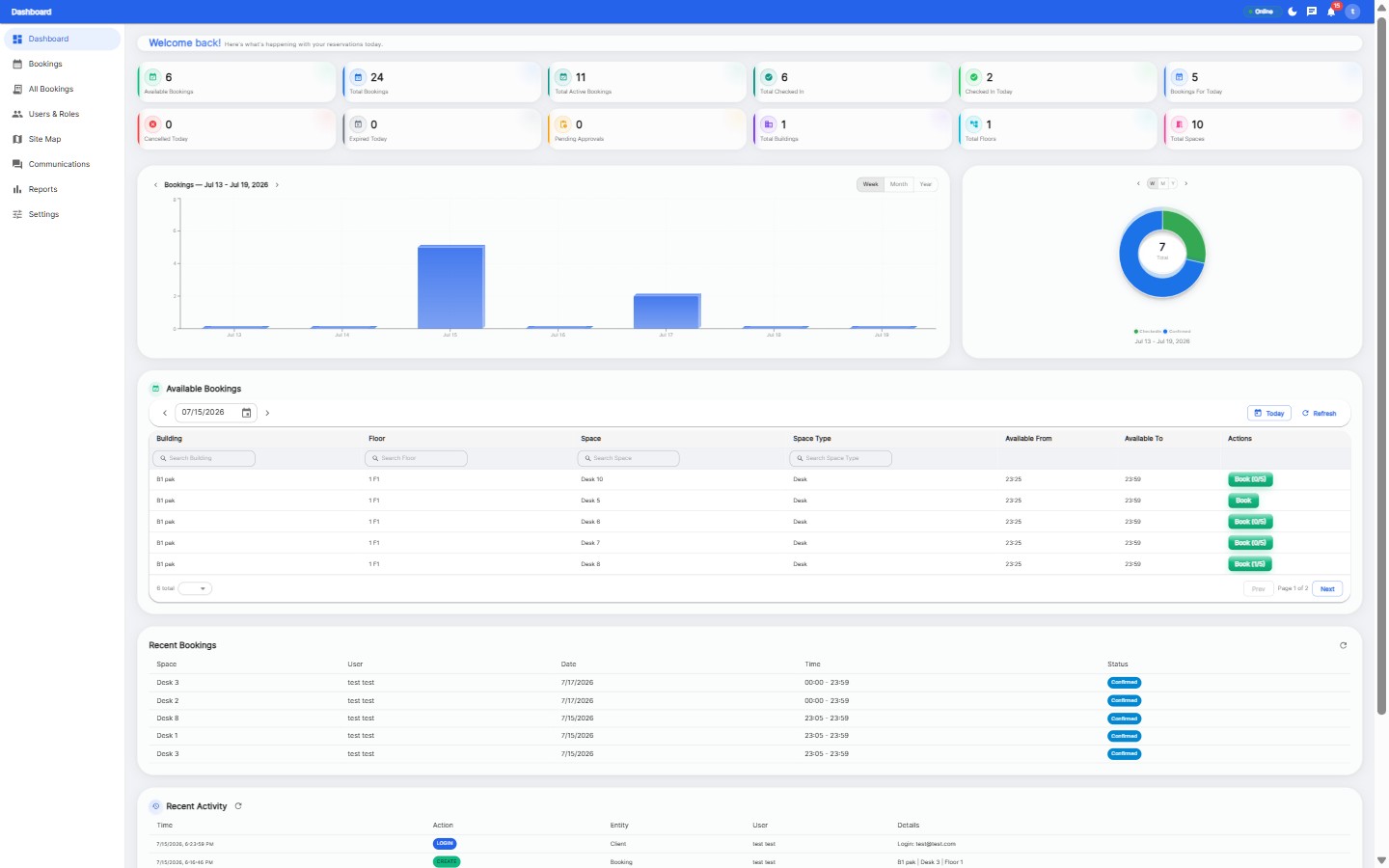
For most hybrid companies, real estate is the second-largest operating cost after payroll, and it is one of the few large costs that can be reduced without cutting headcount. Workspace management software makes those reductions measurable by showing which space is used, when, and by whom.
The savings come from four places. Not all apply equally to every company, but most hybrid offices find something material in at least three of them.
If desks run at 45% utilization, roughly half your desk cost is buying empty space. Reducing the desk ratio to 0.7 per person and consolidating the least-used floor is achievable in most hybrid offices within three to four quarters.
At roughly $18,000 per desk per year fully loaded, even modest consolidation produces seven-figure annual savings at scale.
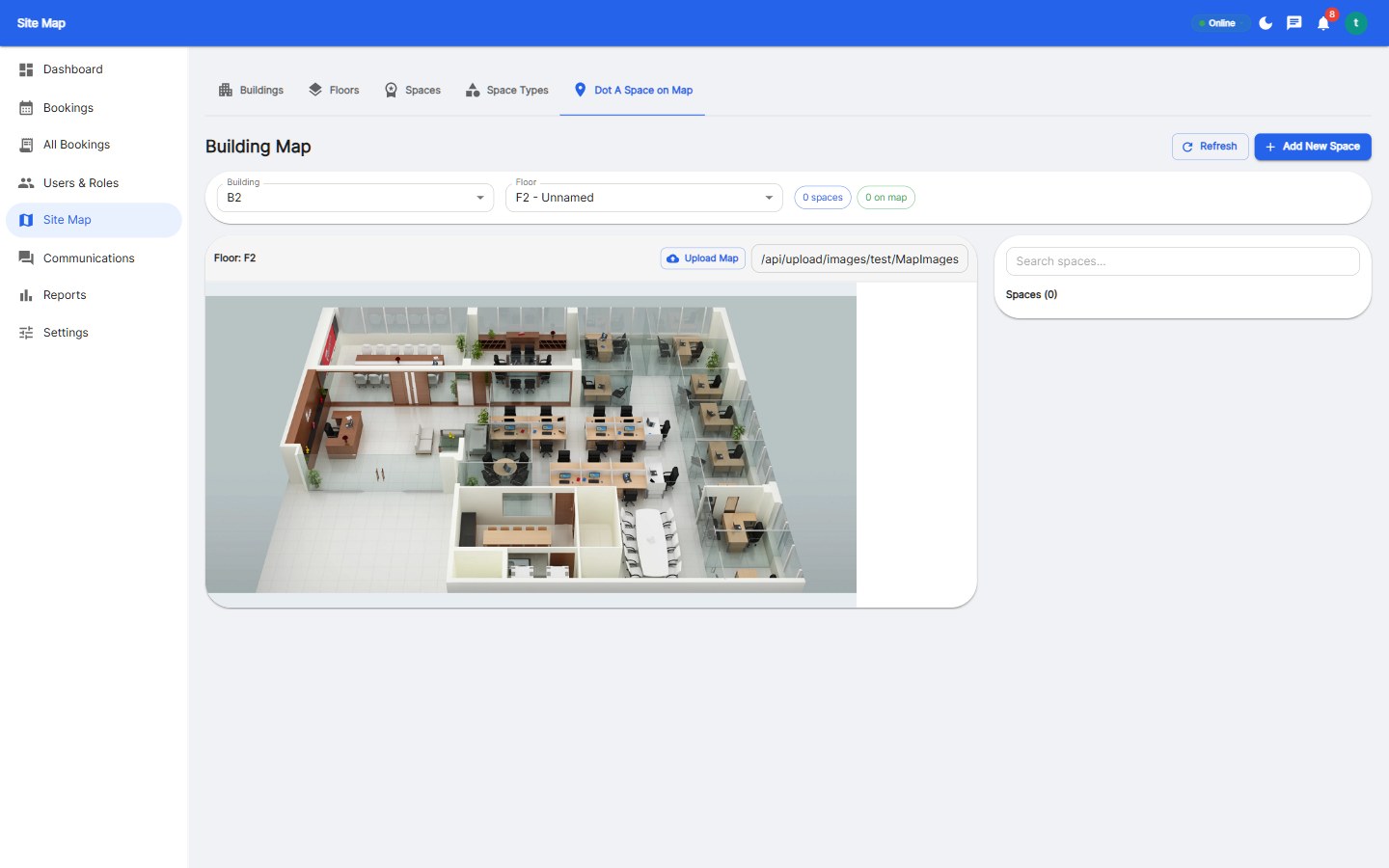
Using booking data to close down underused zones on low-attendance days typically saves $100–$150 per desk per year in HVAC and lighting, plus reduced cleaning and security costs in closed areas.
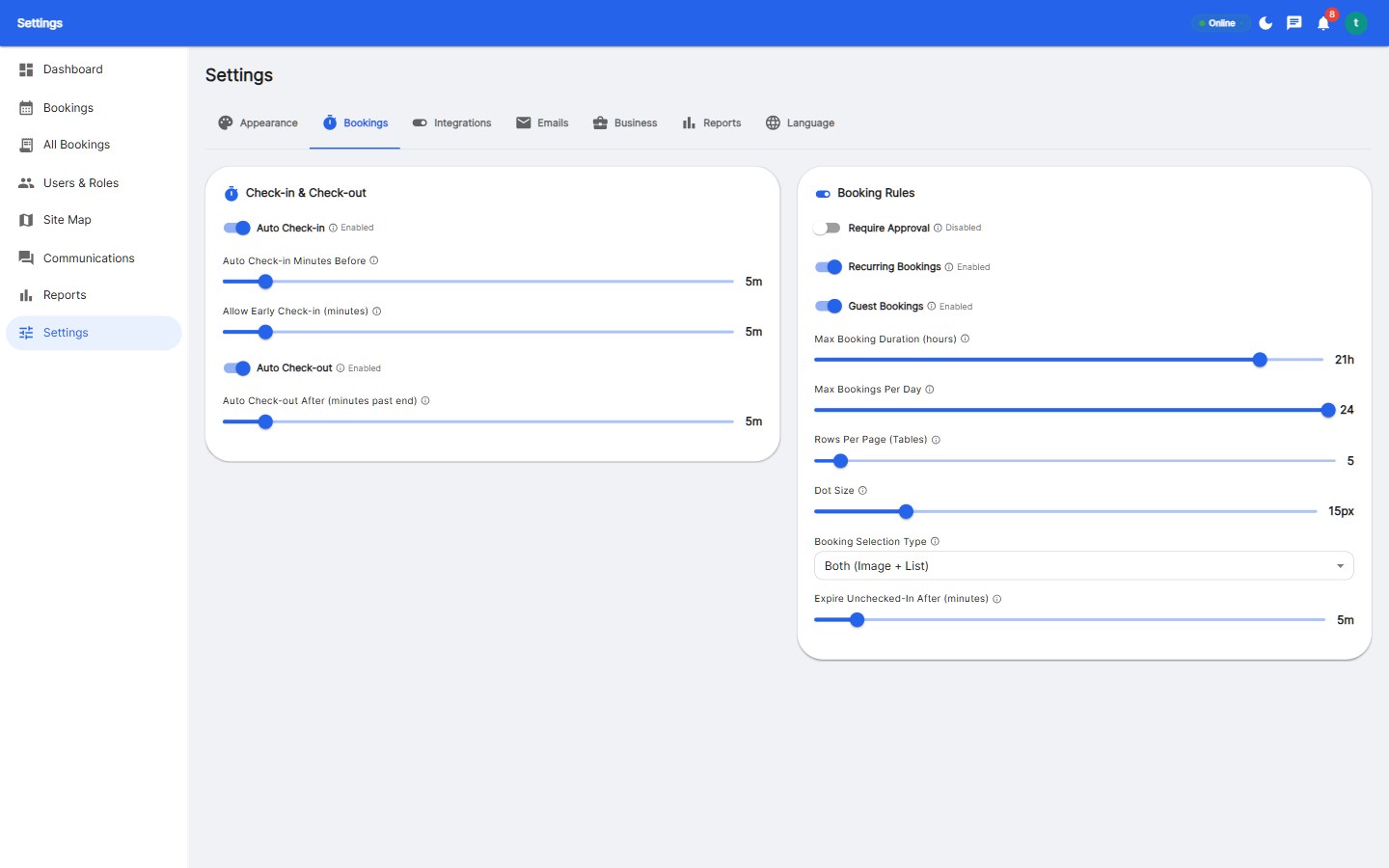
A 20% no-show rate on booked desks effectively burns a fifth of your bookable capacity. Check-in rules with automatic release recover most of it without adding space — and without asking employees to police each other.
Spreadsheets, email chains and floor plans taped to walls carry a real cost that rarely appears on a budget line:
Automation removes most of this overhead in the first weeks.
| Lever | Typical impact | Time to realise |
|---|---|---|
| Desk consolidation | 20–30% of desk space | 2–4 quarters |
| Energy in closed zones | $100–$150 per desk / year | 1–2 quarters |
| No-show recovery | 10–20% of bookable capacity | 2–6 weeks |
| Admin overhead | Hours per week for facility staff | Immediate |
Even mid-market workspace platforms price per workspace rather than per employee, which means the licence cost scales down as you consolidate — the opposite of most enterprise software. Model your own scenario with our office space ROI calculator, then compare platforms on our comparison page.
Most hybrid offices above 200 employees find the software cost is covered many times over by no-show recovery and desk consolidation, provided they act on the utilization data rather than just collecting it.
Not if peak days are protected and teams keep their zones. Problems arise when space is cut faster than the data supports, or when booking is slow and unreliable.
Usually not. Booking plus check-in gives reliable bookable-space utilization. Sensors help for unbooked or open areas, but they are an optional refinement.
No-show recovery is visible within weeks. Energy savings follow zone-closure policies. Real-estate savings land at the next lease event or consolidation milestone.

Enterprise workspace management platform. Book desks, meeting rooms, and parking spots in seconds.
Get product updates and workspace tips.