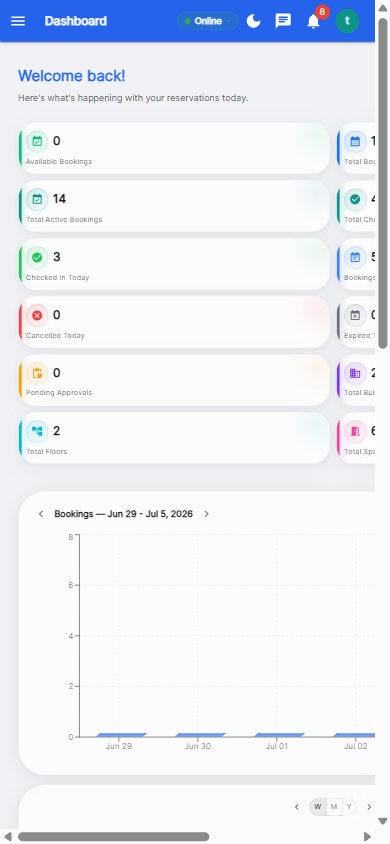
Activity-based working (ABW) is an office model where employees choose a workspace based on the task at hand: quiet zones for deep work, collaboration pods for teamwork, meeting rooms for calls, and lounges for breaks. No assigned seats; the space is designed around activities instead of people.
Deep work zones. Silent, phone-free areas with individual desks.
Collaboration zones. Open pods, whiteboards, small team tables.
Meeting rooms. Sized from huddle rooms to boardrooms.
Focus booths. One-person phone booths for calls.
Social spaces. Lounges, coffee points and break areas.
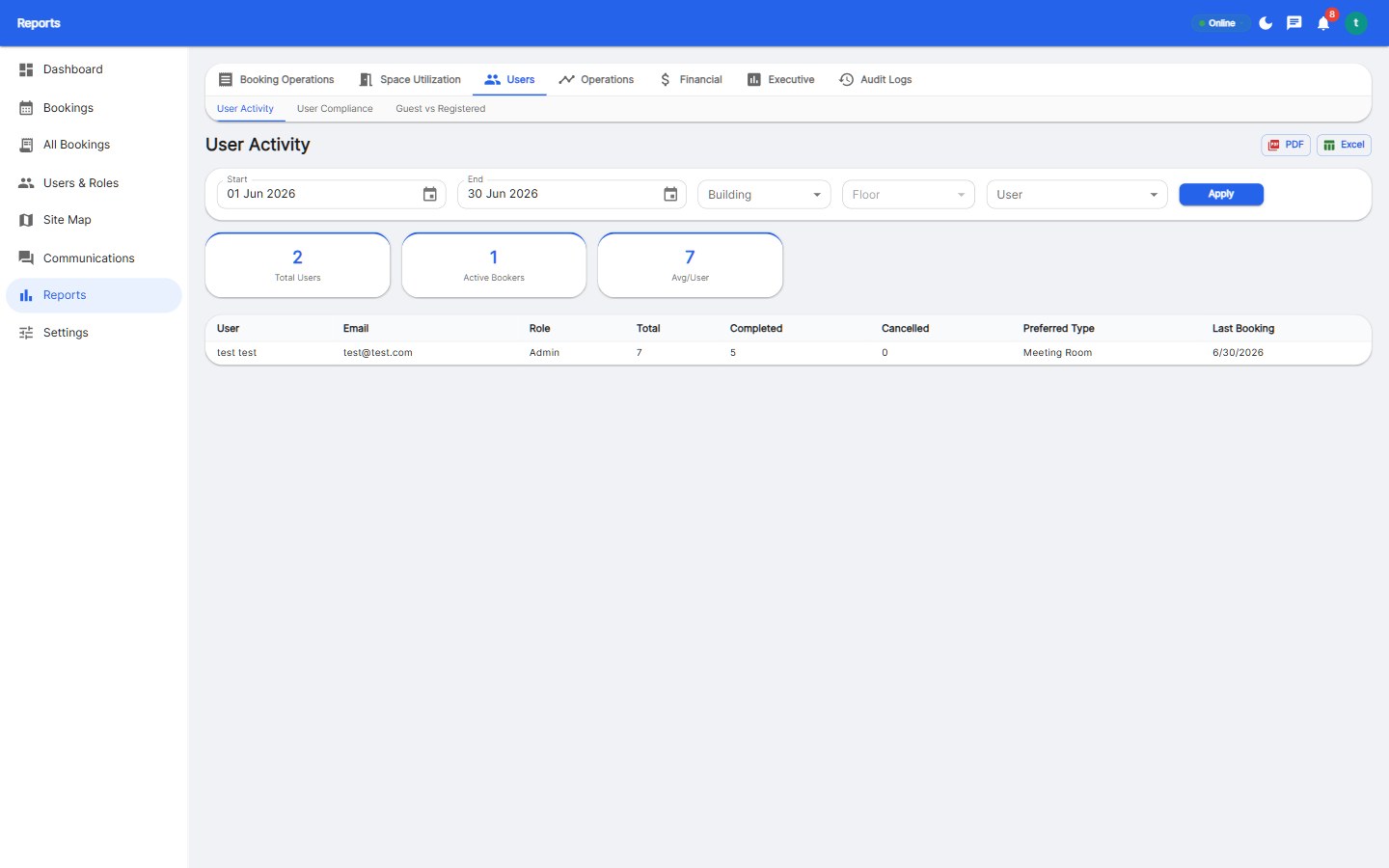
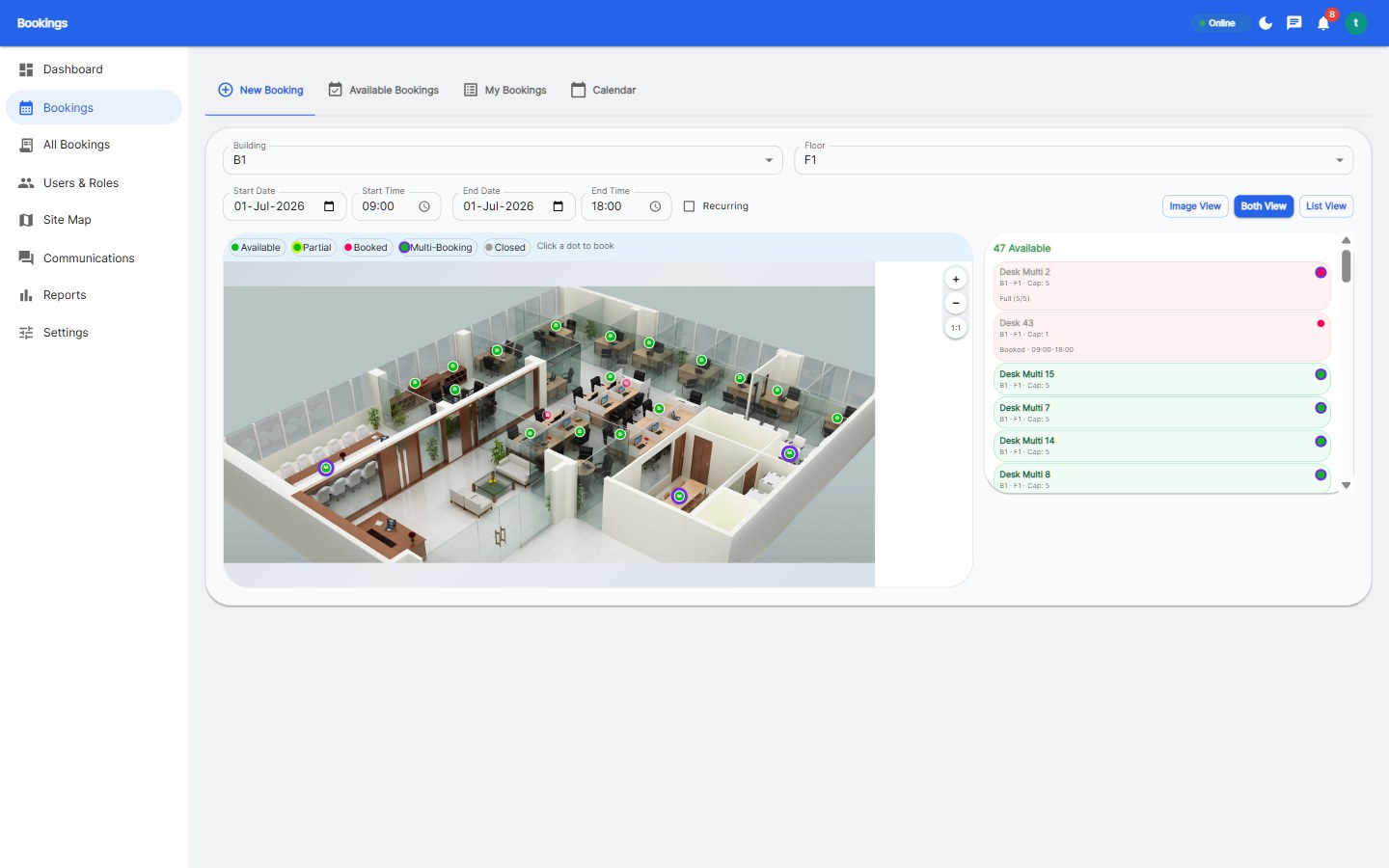
Without a booking layer, ABW turns into a scramble for the best desks and rooms. Booking software with floor plans lets employees see and reserve the right zone for the task, and gives facilities utilization data per zone to tune the mix. Our utilization guide explains what to measure.
1. Audit activities. Track what people actually do for two weeks.
2. Design zones. Size each zone to observed demand.
3. Pilot. Run one floor or team for a month.
4. Communicate. Explain the why; resistance comes from surprise.
5. Add booking. Floor-plan booking makes zones usable and measurable.
6. Iterate. Review utilization monthly and adjust zone ratios.
Is activity-based working the same as hot desking? No. Hot desking is unassigned desks; ABW is a full space design with zones matched to tasks. See the model comparison.
Does ABW save money? It cuts space needs and enables consolidation, typically 25-35% when paired with utilization data.
What tools do you need for ABW? Booking software with floor plans, room booking, and utilization reports: what Reservete includes.

Enterprise workspace management platform. Book desks, meeting rooms, and parking spots in seconds.
Get product updates and workspace tips.