Office space consolidation is the process of reducing your real estate footprint - closing floors, subleasing space, or shifting teams - based on actual utilization data. Hybrid work made consolidation possible: most offices now run at 40-55% utilization, so 20-30% of space is consolidatable without affecting how people work. The data-driven approach uses booking and check-in analytics to decide what to close, when, and how to relocate teams.
Real estate is typically 25-35% of total occupancy cost. With hybrid work, the average office over-provides space by 30-40%. That mismatch is the largest addressable cost in most organizations - and the only lever that moves the needle by millions, not thousands.
Consolidation is not about squeezing employees; it is about matching the footprint to actual usage. Teams that consolidate with data report equal or better collaboration because the space that remains is denser, more intentional, and better utilized.
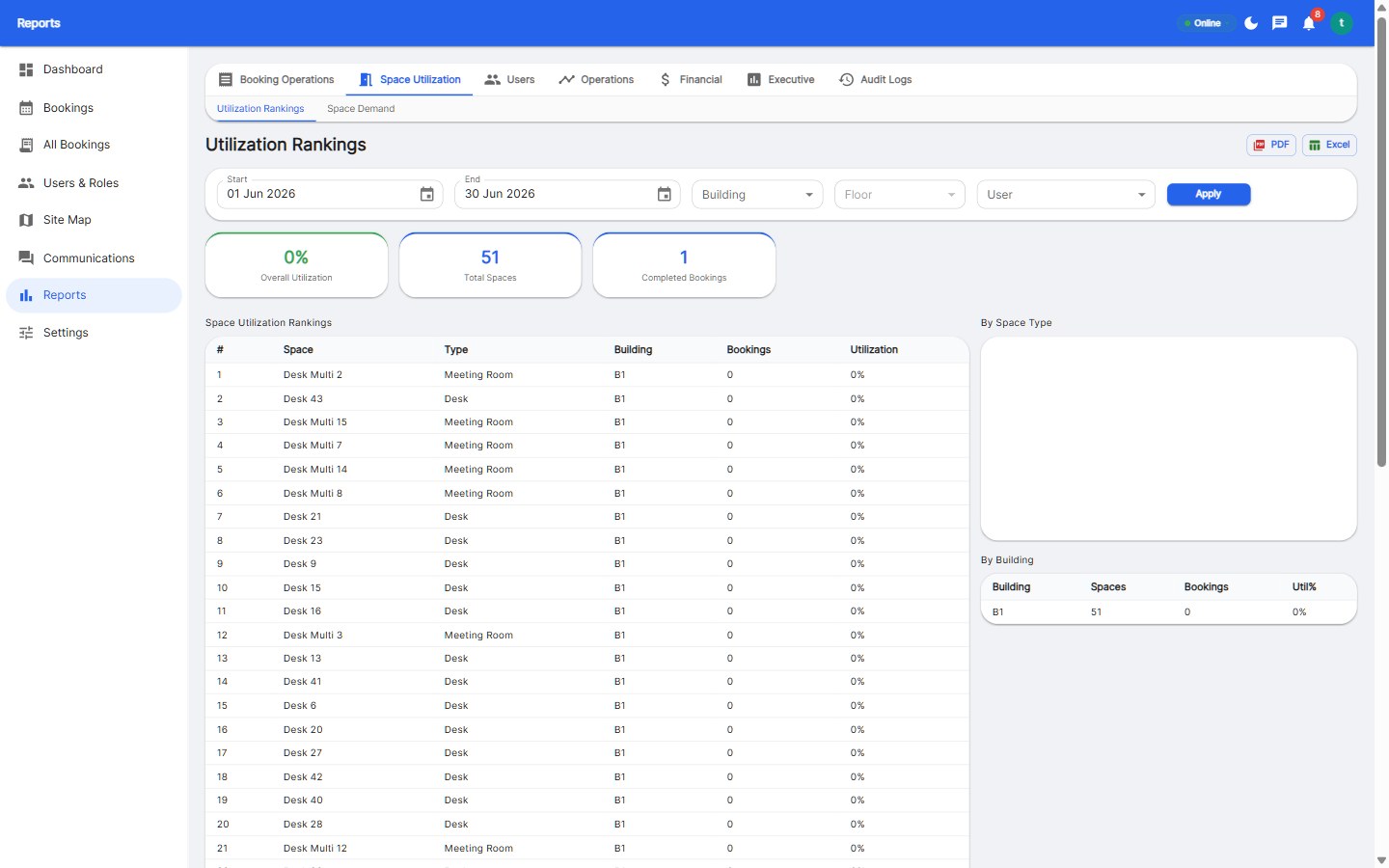
Collect two weeks of booking and check-in data by floor and zone. You need: utilization per floor, occupancy by day and hour, no-show rates, and cost per used desk. Without this baseline, every later decision is a guess.
Floors running under 50% utilization are consolidation candidates. Rank them by cost per square foot and ease of relocation. Exclude floors with anchor-day peaks above 80% - those are load-bearing.
Move the lowest-utilization teams first, close the floor, and re-measure for 30 days before the next phase. Phase in 20-30% steps with a 10% capacity buffer so anchor days never overflow.
Bring 12 months of utilization trends to the renewal. Either reduce square footage, renegotiate the rate, or move to flexible terms. Data is the strongest negotiating tool facilities has.
| Example | Value |
|---|---|
| 50-desk floor at $1,200/desk/year | $60,000/year |
| 120-desk floor at $1,500/desk/year | $180,000/year |
| Energy savings per closed floor | $20,000-$60,000/year |
Model your own numbers with the Reservete ROI calculator - it computes desks needed, wasted desks, and annual savings from your utilization and no-show inputs.
20-30% is typical, guided by utilization data. Hybrid offices average 40-55% utilization, so the headroom is structural.
Done with data, no - denser, more intentional space improves collaboration. Done without data, yes - you can close a floor teams actually need. Measure first.
In phases: 20-30% every 30-90 days, re-measuring between phases. Sudden large moves create disruption; staged moves build confidence.
Utilization by floor and zone, occupancy by day/hour, no-show rates, and cost per used desk - all generated automatically by your booking platform.
Ready to consolidate with confidence?
Start your free 30-day trial at Reservete.com - no credit card required, full access to every feature.

Enterprise workspace management platform. Book desks, meeting rooms, and parking spots in seconds.
Get product updates and workspace tips.