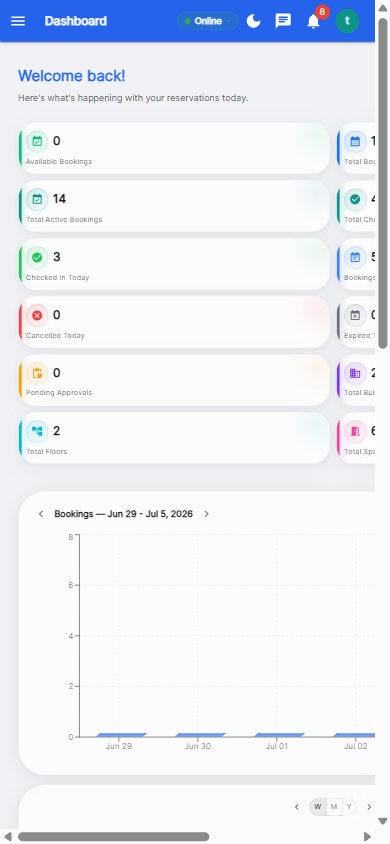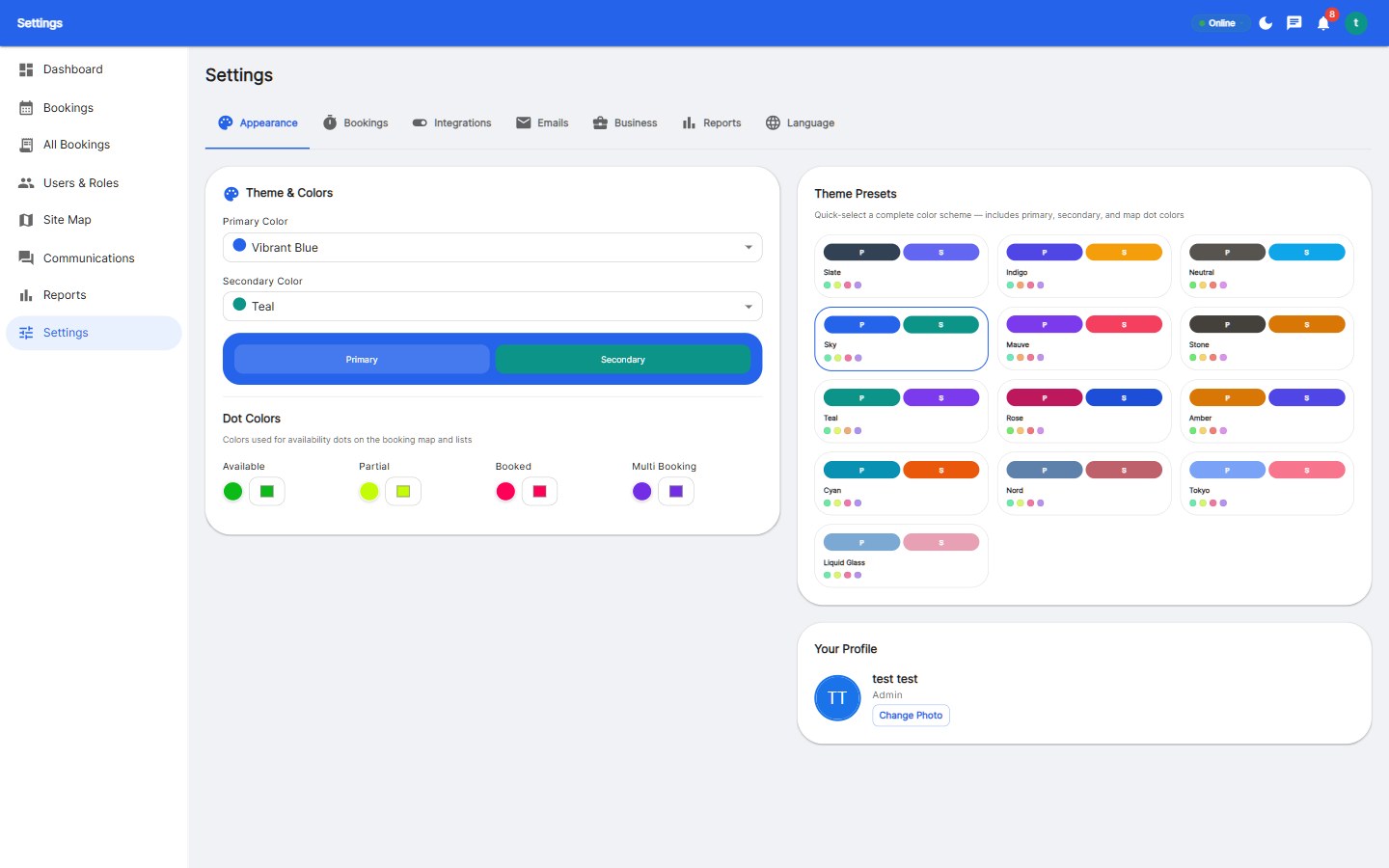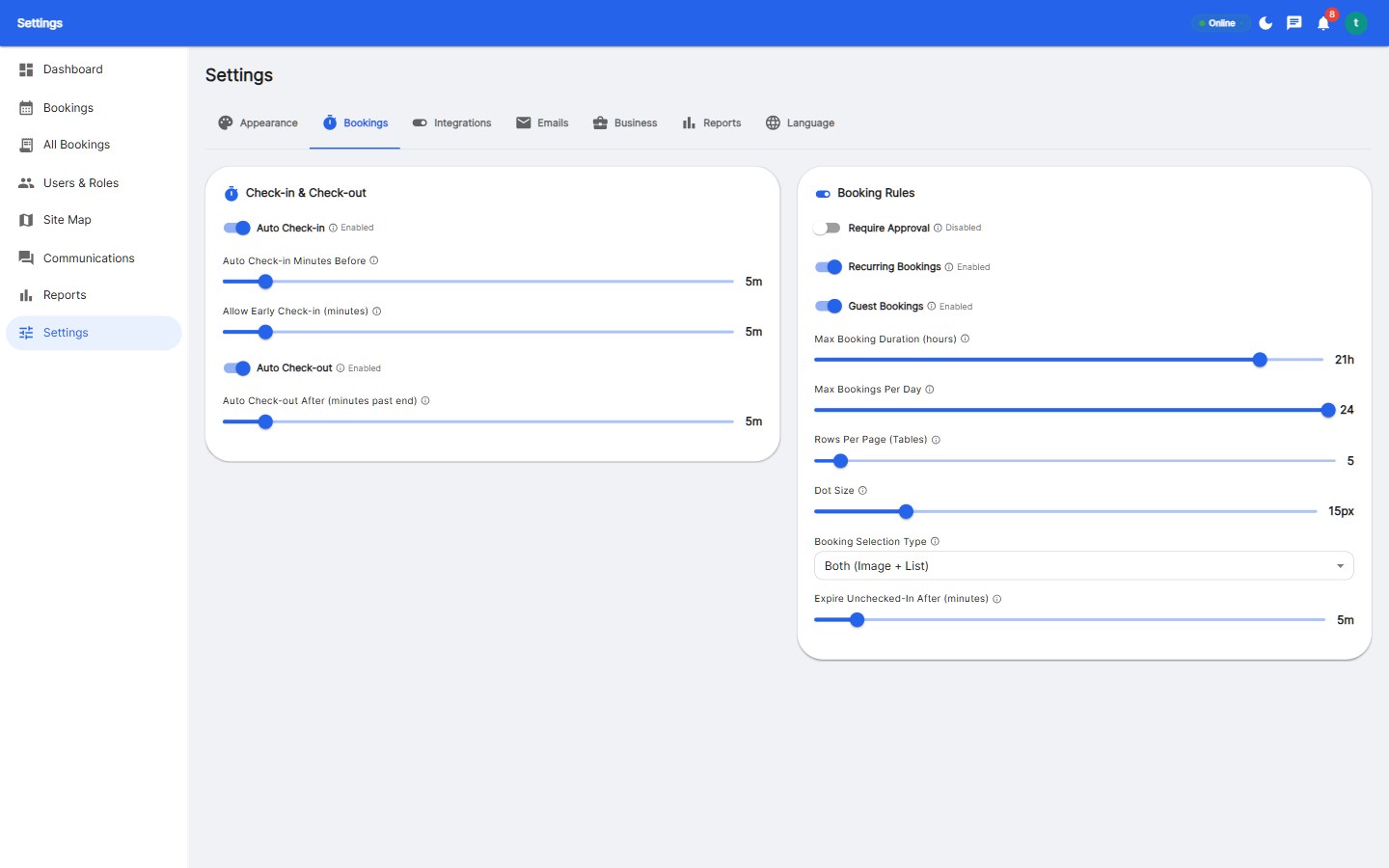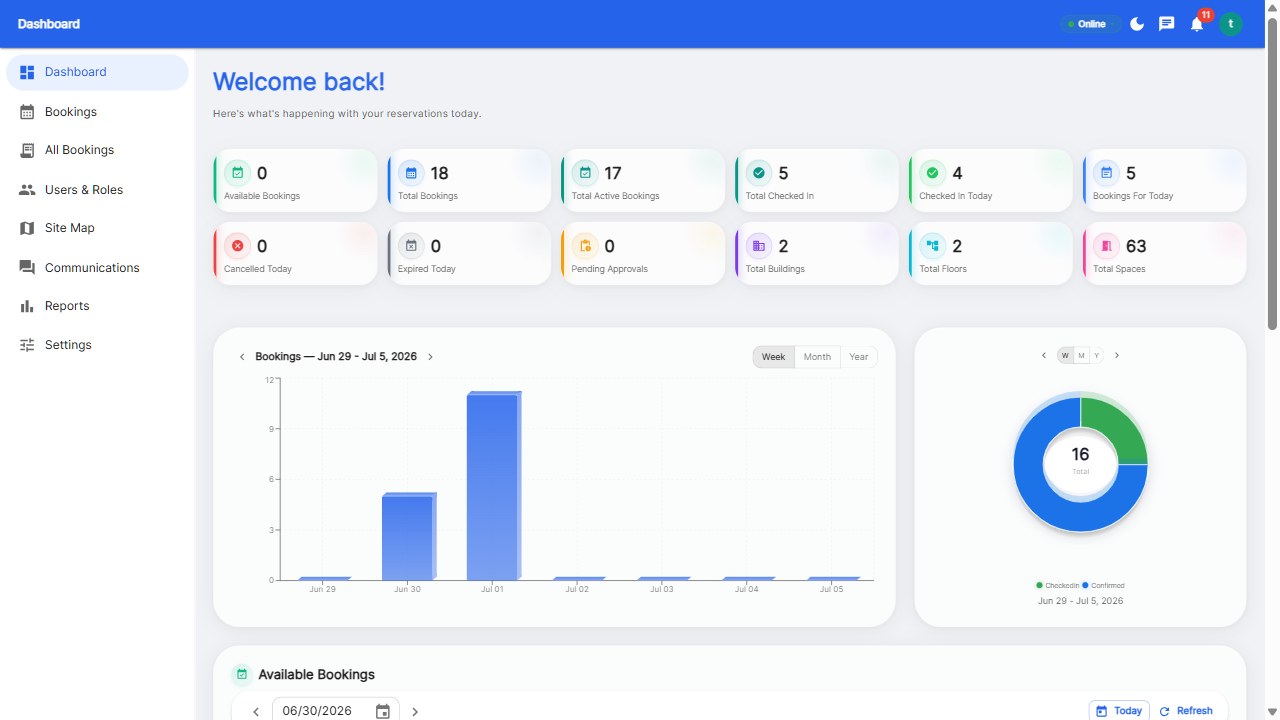
The best workspace management software for enterprises in 2026 combines desk and room booking, interactive floor plans across multiple buildings, SSO, API access, advanced analytics, and enterprise-grade security (SOC 2 Type II). Top options are Reservete (enterprise plan with unlimited users), Robin Powered, and OfficeRnD - with Reservete typically costing a fraction of the others.
Enterprise buyers evaluate differently from small teams, and the difference is mostly about control and proof. You need SSO with Google or Microsoft Entra ID, role-based access control with granular permissions, multi-building and multi-floor support, API access for internal integrations, 99.9% uptime SLAs, and security documentation your procurement team can take to legal.
A vendor that cannot answer procurement's security questionnaire should be disqualified early. The questionnaire asks about encryption, data residency, subprocessors, retention, audit logs, and incident response. Reservete publishes its security and compliance details publicly - a strong signal for enterprises that expect transparency from day one.
Equally important is architecture. Database-per-tenant isolation, RBAC with per-user permission overrides, admin-only sensitive operations, and full activity logging with IP tracking are the baseline for serious organizations. If a vendor cannot articulate their multi-tenant isolation model, walk away.
| Platform | Enterprise model | Standout strength | Watch out for |
|---|---|---|---|
| Reservete | Custom quote, unlimited users | All-in-one: booking, chat, calls, 15+ analytics reports | Newer entrant; validate roadmap fit |
| Robin Powered | Custom, $100+/month | Room scheduling + display hardware ecosystem | Hardware costs, desk booking as add-on |
| OfficeRnD | Custom, from $350/month | Coworking and flex-space operations | Complexity for standard offices |
| Envoy | Custom, from $250/month | Visitor management heritage | Desk booking as secondary product |
Each platform has a center of gravity. Robin's is meeting-room hardware; OfficeRnD's is flexible-space management; Envoy's is visitors. If your enterprise problem is broadly desk and room booking across many buildings with strong analytics, a dedicated platform like Reservete is usually the cleanest fit - and materially cheaper.
Work through this list with every vendor, in writing, before the demo. It filters out tools that are not ready for enterprise conversations and keeps your shortlist honest.
Enterprise value comes from integrations. The meaningful ones are: M365 calendar two-way sync with automatic updates, Google Workspace, Slack and Microsoft Teams presence, SMS providers (Twilio, Vonage, MessageBird), and a full REST API with Swagger documentation and real-time SignalR webhooks.
Ask vendors for their API documentation before the demo. If they hesitate, the API is probably weak. Then ask how their webhooks work: does your internal system get notified the moment a booking is created, checked in, or cancelled? For enterprises feeding data into BI platforms, this is often the difference between a tool and a platform.
SSO deserves its own question: can you enforce SSO-only mode (no password logins)? Does it support Microsoft Entra ID and Google OAuth 2.0 with your identity provider? Can you map workspace roles from your existing directory groups? Vendors that answer these fluently understand enterprise identity.
Enterprises typically carry 30-40% of their real estate unused. A workspace platform that improves utilization by 25% on a 1,000-desk portfolio - say, $1,200 per desk per year - unlocks roughly $300,000 per year in consolidation opportunities. Against that, even a $50,000 annual software contract is a rounding error.
Build the business case with utilization data you already have: peak headcount, current desk counts, and lease costs per square foot. Use the ROI calculator to turn those inputs into a defensible savings number, then add the productivity angle: two hours per employee per week of desk-hunting time, valued at your internal cost of labor.
Present the numbers as a portfolio decision, not a tool purchase: space consolidation by quarter, no-show reductions by month, and the lease decisions the data will inform. CFOs fund workspace projects when the case is framed around square meters and money, not features.
Phase 1 is where most enterprise deployments succeed or fail. Staff it properly: a workspace champion, a facilities contact, and IT support for SSO. Measure adoption weekly, and define success as 80%+ of bookable seats used by real employees by week four.
It's a platform that combines desk/room booking with SSO, RBAC, API access, multi-building floor maps, advanced analytics, and auditable security - designed for organizations with 100+ employees and strict IT requirements.
Enterprise pricing is custom-quoted and typically starts around $500/month. Reservete's enterprise plan includes unlimited users, dedicated account management, 24/7 support, SLA guarantees, and an on-premise option.
For most enterprises, yes - procurement will ask for it. Reservete is SOC 2 Type II certified with 256-bit encryption and third-party audits.
Yes, if the vendor offers it. Reservete's enterprise plan includes an on-premise deployment option for organizations with strict data residency requirements.
A phased rollout typically takes 6-12 weeks end to end: a 30-day pilot in one building, then staged expansion. Modern platforms like Reservete compress the technical setup to hours; the timeline is driven by change management.
See how the platform handles enterprise scale.
Start your free 30-day trial at Reservete.com - no credit card required, full access to every feature.

Enterprise workspace management platform. Book desks, meeting rooms, and parking spots in seconds.
Get product updates and workspace tips.